



The Machines Are Getting Smarter: 10 Technologies Reshaping Heavy Equipment Across The Gulf
 0 likes
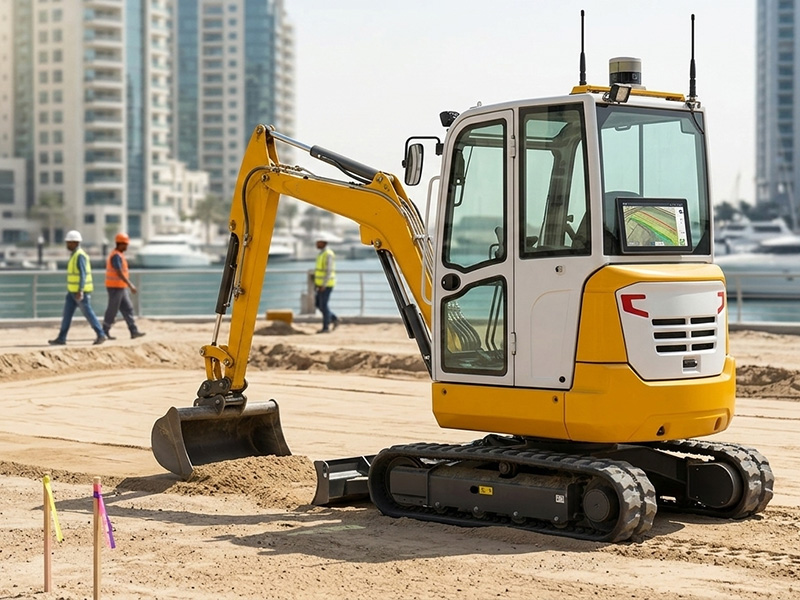
Walk onto any construction site in Dubai or Riyadh today and you'll notice something odd. Fewer people. Quieter engines. Excavators that seem to know where they're digging before the operator touches the controls.
The equipment revolution isn't coming-it's here, and it's rewriting the economics of every megaproject from NEOM to the Dammam metro extension. After fifteen years covering industrial tech, I've watched plenty of "transformative" innovations fizzle out. But what's happening now in heavy machinery feels different. The Gulf states, flush with Vision 2030 capital and desperate to squeeze productivity from their expatriate-dependent construction sectors, are becoming an unlikely laboratory for equipment tech that would've seemed like science fiction a decade ago.
Technology Overview: Why Now, Why Here
The GCC has always loved big machinery-the bigger, the shinier, the better. But economic pressures are forcing a recalibration. Labour costs are rising even as governments push localisation. Project timelines are compressing. And there's this nagging reality that traditional diesel-guzzling equipment doesn't exactly align with the region's newfound climate commitments.
Enter a cluster of emerging technologies-some genuinely breakthrough, others just clever applications of existing tech-that are fundamentally changing what equipment can do and how much it costs to operate. We're talking telematics systems that know more about your loader than you do. Autonomy that works reliably in 48-degree heat. Electric and hydrogen powertrains that don't make project managers laugh anymore.
What most people miss here is that adoption in the Gulf isn't following the Western pattern. Free zone contractors and government megaprojects are leapfrogging straight to advanced tech, skipping the incremental upgrades entirely.
The Ranked Innovations Reshaping Job Sites
1. Predictive Telematics Systems
Modern telematics goes far beyond GPS tracking. The systems now pulling data from equipment across Saudi Arabia's construction boom predict component failures three weeks out, optimize fuel consumption in real-time, and automatically schedule maintenance before anything breaks. Caterpillar's latest platform reportedly cut unplanned downtime by 34% on one Riyadh metro project-that's the difference between penalty clauses and bonuses.
2. Machine Control with Real-Time Terrain Mapping
Grade control systems have existed for years, but the new generation integrates LiDAR, photogrammetry, and cloud-based design files to guide equipment with centimetre precision. An operator in Abu Dhabi can now rough-grade a foundation in one pass that used to take three. The learning curve is steep, though-I've seen crews struggle for months before the efficiency gains materialise.
3. Semi-Autonomous Dozers and Graders
True autonomy in construction equipment remains elusive, but semi-autonomous systems are proliferating fast. (Full autonomy is mostly limited to mining operations in Australia-the technology isn't quite ready for the organised chaos of urban job sites.) These machines handle repetitive tasks like compaction patterns while operators monitor from climate-controlled cabs or even off-site control rooms. Qatar's Al Rayyan Stadium used semi-autonomous compactors that ran night shifts with skeleton crews.
4. Electric Compact Equipment
Battery-electric skid steers and compact excavators have crossed the viability threshold. Volvo's electric compact excavators are now standard on several Dubai projects, loved by foremen for their silence and hated by technicians still learning the electrical systems. The business case works in the Gulf's heavily subsidised electricity markets-barely. Range anxiety in 45-degree summers remains real.
5. Hydrogen-Powered Wheel Loaders
Here's where it gets interesting. The first commercial hydrogen loader deployments are happening not in Europe but in the industrial zones outside Jubail and Jebel Ali. Why? Proximity to hydrogen production, government incentives that actually move the needle, and clients willing to pay a premium for "green" credentials. The technology is promising but expensive-we're talking 40% cost premiums over diesel equivalents.
6. Augmented Reality Maintenance Systems
Technicians wearing AR headsets can now diagnose complex hydraulic problems with remote guidance from specialists in Germany or South Korea. This matters enormously in the Gulf, where deep technical expertise is scarce and expat turnover is brutal. One Kuwait-based contractor told me AR cut their mean time to repair by half.
7. Advanced Collision Avoidance
Sensor fusion technology-combining radar, cameras, and ultrasonic sensors-is finally reliable enough for the dusty, chaotic environment of GCC construction sites. These systems prevent the depressingly common accidents where equipment backs into workers or other machines. The safety improvements are measurable; several Saudi contractors have mandated the tech after seeing insurance premiums drop.
8. 5G-Enabled Remote Operation
Low-latency 5G networks are enabling true remote operation of equipment for hazardous tasks. Operators in Muscat are controlling excavators on mountainside projects from sea-level control centres. The technology works-when the network holds up.
9. Modular Electric Powertrains
Retrofit electric powertrains that replace diesel engines in existing equipment are gaining traction. The economics make sense for high-utilisation machines with years of structural life left. Several Dubai-based equipment rental firms are quietly building electric fleets this way rather than buying new.
10. AI-Optimized Fleet Management
Machine learning algorithms now determine which equipment goes where, when it needs fuel, and how to minimise repositioning costs across multi-site operations. The efficiency gains sound modest-8% to 12% in most studies-but that's the difference between profit and loss on competitive government tenders.
Impact on Operations: The Real-World Numbers
The operational improvements aren't hypothetical. Fuel consumption is dropping 15-25% with telematics optimisation alone. Unplanned downtime has fallen by a third where predictive maintenance is properly implemented. And labour productivity-the metric that matters most to GCC contractors-is genuinely improving as machines handle more of the precision work.
But here's the thing: these gains don't materialise automatically. The contractors seeing real results are the ones who've invested in training, hired new types of technical staff, and rebuilt their workflows from scratch. The ones who bolted telematics onto existing operations and hoped for magic are mostly just paying subscription fees for data nobody looks at.
Adoption Challenges: Why Implementation Lags Promise
The Gulf loves new technology in theory. In practice? Implementation is messy.
The biggest obstacle isn't cost-budgets for flagship projects remain generous. It's the human infrastructure. Who maintains a hydrogen loader when it breaks? Where do you find technicians who understand both hydraulics and high-voltage electrical systems? The region's technical training programmes are improving but years behind the equipment curve.
Then there's the connectivity problem. Telematics and remote operation depend on reliable networks, and plenty of GCC project sites still have spotty coverage despite all the 5G marketing. I've watched autonomous equipment sit idle because the satellite link dropped.
Cultural factors matter too. Veteran operators who've run equipment for twenty years don't always embrace systems that second-guess their judgment. Smart contractors handle the transition carefully, positioning technology as tools that make operators more capable, not replacements waiting to happen.
The regulatory environment remains fragmented. Equipment certified in the UAE might not be approved in Saudi Arabia. Standards for autonomous operation are still being written. And nobody's quite sure how to classify a hydrogen loader for insurance purposes.
What Comes Next
The trajectory is clear even if the timeline isn't. Equipment will continue getting smarter, quieter, and cleaner-pushed by the Gulf states' simultaneous commitment to massive construction programmes and net-zero pledges that may or may not be serious.
The winners will be the contractors who treat these technologies as systemic changes requiring new skills and workflows, not just capital purchases. The losers will be the ones who keep waiting for the technology to mature while their competitors quietly build operational advantages that compound over time.
Standing on that Dubai job site, watching an electric excavator guided by machine control do work that used to require three machines and twice as many people, the future feels less like prediction and more like documentation. The transformation isn't coming. Look around-it's already here.
Leave a reply