





Post Date:
Sep 22, 2026
|
Future of Mobile Fuel Stations In GCC
Future of Mobile Fuel Stations In GCC
Post Date:
Sep 22, 2026
|
Brought to you by

The fuel retail and distribution landscape in the GCC is undergoing a significant transformation. Traditionally, fuel supply has depended heavily on fixed retail stations, requiring high capital investment, extensive land allocation, regulatory approvals, civil works, utility connections, and long construction timelines. While stationary fuel stations remain essential for mass retail operations, the growing demand for flexible, cost-effective, and on-demand fuel delivery has created strong opportunities for mobile fuel stations across the region.
Mobile fuel stations represent a practical and future-ready solution for fuel distribution companies, commercial fleets, industrial users, remote operations, and individual customers. This model allows fuel suppliers to take the station directly to the customer, reducing dependency on fixed infrastructure and improving service accessibility.
Changing Market Trend in the Middle East
In the Middle East, especially across the GCC, mobility, convenience, and operational efficiency are becoming key drivers in the fuel distribution industry. Urban expansion, logistics growth, construction activities, fleet operations, and remote industrial projects have increased the need for fuel availability beyond conventional petrol stations.
Building a traditional fuel station is highly expensive. It requires land acquisition or leasing, approvals, underground or above-ground storage tanks, dispensing systems, canopy structures, safety systems, environmental compliance, manpower, and continuous maintenance. For distribution companies, this creates a high fixed-cost business model.
Mobile fuel stations offer a more economical alternative. They can be deployed based on demand, moved from one location to another, and used to serve both planned and emergency requirements. Instead of waiting for customers to visit the fuel station, the fuel station reaches the customer.
Concept of Mobile Fuel Stations
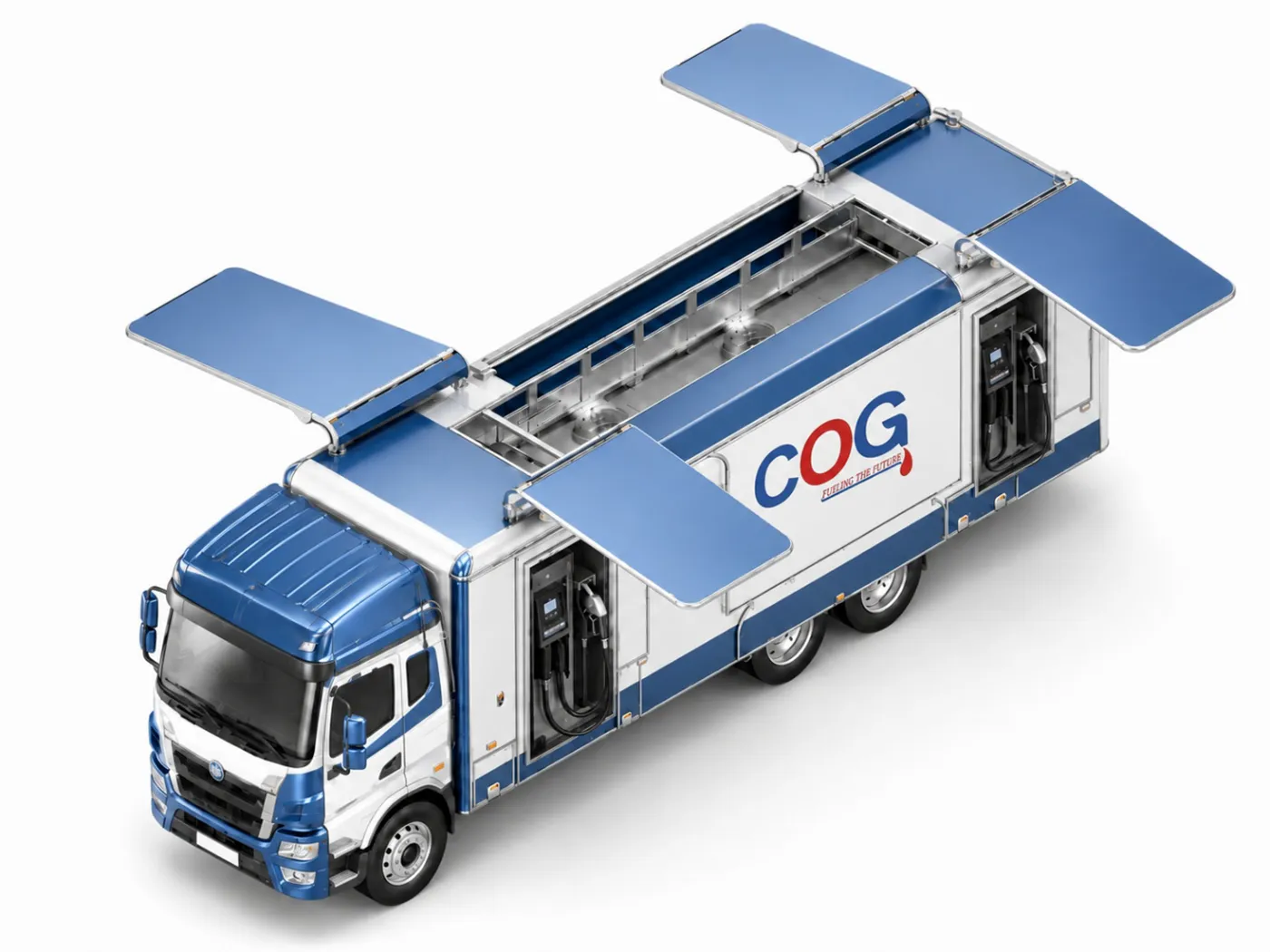
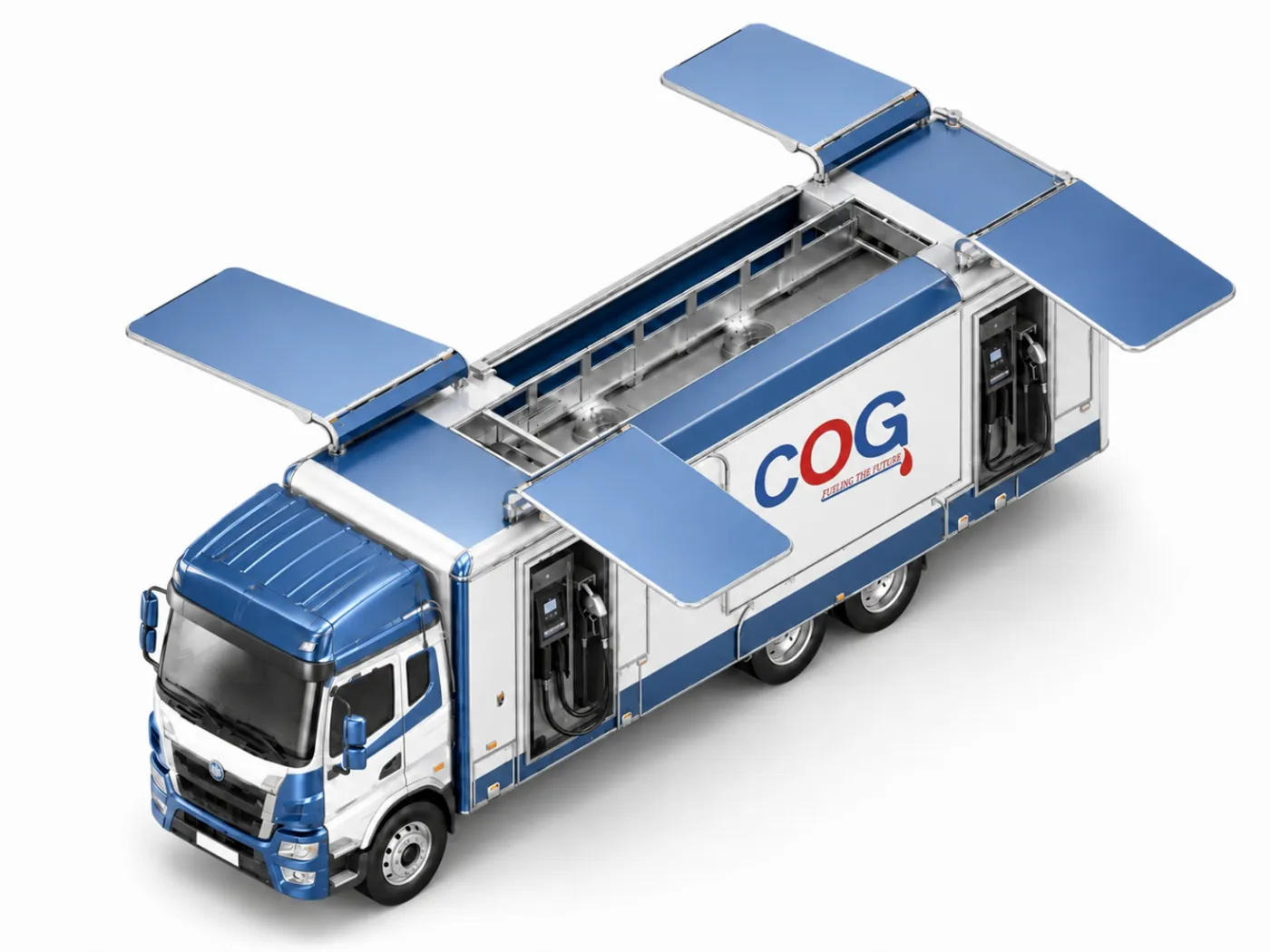
A mobile fuel station is generally designed as a fuel tanker or specialized vehicle equipped with fuel storage, dispensing units, metering systems, hose reels, safety equipment, digital payment systems, tracking devices, and control systems. These units can serve cars, commercial vehicles, equipment, generators, construction machinery, and industrial fleets.
The concept is simple but powerful: fuel supply becomes mobile, flexible, and customer-focused.
This model is suitable for both:
B2C – Business to Customer
Mobile fuel stations can provide fuel directly to individual customers at residential areas, parking locations, offices, or designated service points. This is highly convenient for customers who prefer on-demand fuel delivery without visiting a petrol station.
B2B – Business to Business
For companies operating fleets, buses, trucks, construction equipment, generators, or remote site machinery, mobile fuel stations offer major operational advantages. Fuel can be delivered directly to the operating location, reducing vehicle downtime, eliminating unnecessary travel to fuel stations, and improving fuel management.
Economic Advantages for Distribution Companies
The strongest advantage of mobile fuel stations is the reduction of capital expenditure. A stationary fuel station requires significant investment before it can begin generating revenue. In comparison, a mobile fuel station requires a much lower investment and can be deployed quickly.
For distribution companies, the economics are attractive because mobile fuel stations can be operated with better asset utilization. One mobile unit can serve multiple locations in a day, depending on demand, route planning, and fuel capacity. This allows the company to generate revenue from different customer segments without investing in multiple fixed stations.
Key economic benefits include:
- Lower infrastructure cost compared to permanent fuel stations.
- Faster deployment and quicker revenue generation.
- Better flexibility in serving high-demand locations.
- Reduced dependency on expensive land and civil construction.
- Ability to test new markets before committing to fixed infrastructure.
- Improved customer retention through direct service delivery.
- Opportunity to serve fleet customers under long-term fuel supply contracts.
When annual revenue is evaluated against the investment cost, the business case for mobile fuel stations becomes clear. A well-utilized mobile fuel station can generate consistent income while avoiding many of the fixed expenses associated with traditional fuel stations. This makes it a highly practical model for distribution companies looking to expand their reach in a controlled and economical manner.
Benefits for Customers
Mobile fuel stations are not only beneficial for distribution companies; they also provide direct value to customers.
For individual customers, the major benefit is convenience. Fuel can be delivered at the required location, reducing time spent in queues or travelling to a petrol station. For busy urban customers, this service can be particularly attractive.
For commercial customers, the benefits are even greater. Fleet operators, logistics companies, construction contractors, transport companies, and industrial clients can reduce non-productive time by refuelling vehicles and equipment at their own premises or job sites.
This leads to:
- Reduced vehicle downtime.
- Better operational efficiency.
- Improved fuel planning.
- Lower manpower and travel cost.
- Better control over fuel consumption.
- Improved service availability for remote sites.
For large fleet customers, mobile fuel supply can become part of a structured fuel management program supported by digital metering, invoicing, reporting, and consumption tracking.
On-Demand Fuel Supply as a Service Model
The future of mobile fuel stations in the GCC is closely connected to the development of on-demand service models. Similar to food delivery, ride-hailing, and e-commerce logistics, fuel supply can also be organized through digital platforms.
Customers may request fuel through a mobile application, website, or corporate fuel management system. The distribution company can then assign the nearest available mobile fuel station to complete the service. This improves route optimization, customer response time, and asset utilization.
For B2B operations, scheduled delivery models can be implemented. For example, a logistics company may receive fuel every morning before vehicle dispatch, or a construction site may receive fuel at fixed intervals based on equipment usage.
This creates a more predictable and efficient fuel supply chain.
Sustainability and the Future of Mobile Energy Stations
As the GCC moves toward sustainability, clean energy, and electric mobility, the concept of mobile fuel stations can evolve beyond conventional petrol and diesel supply. One promising future application is the mobile battery charging station.
On-demand mobile EV charging units can support electric vehicles in locations where fixed charging infrastructure is limited. This will be particularly useful during the transition phase, when EV adoption grows faster than the development of permanent charging networks.
For distribution companies, this creates an opportunity to transform from fuel suppliers into broader mobile energy service providers. The same business model used for mobile fuel supply can be adapted for mobile battery charging, emergency EV charging, fleet charging support, and remote energy services.
This future model can include:
- Mobile EV charging vehicles.
- Battery energy storage systems.
- Hybrid fuel and charging service fleets.
- Emergency roadside charging.
- Fleet depot charging support.
- Renewable energy integration.
In this way, mobile fuel stations can become the foundation for a larger mobile energy ecosystem in the GCC.
Safety and Regulatory Considerations
Although mobile fuel stations are economical and flexible, safety and compliance remain critical. These units must be designed, manufactured, and operated in accordance with applicable local regulations and international safety standards.
Important considerations include fuel containment, emergency shut-off systems, grounding and bonding, fire extinguishing systems, spill control, metering accuracy, hose management, vehicle stability, hazardous area classification, operator training, and safe operating procedures.
For the model to succeed in the GCC, distribution companies must ensure that mobile fuel stations are not treated simply as tankers, but as complete mobile retail and dispensing systems with proper engineering, safety, and digital control.
Conclusion
Mobile fuel stations represent a strong future opportunity in the GCC fuel distribution market. They offer a practical alternative to expensive stationary fuel stations and provide a flexible, economical, and customer-centric solution for both B2C and B2B applications.
For distribution companies, the model reduces capital investment, improves market reach, and creates new revenue opportunities. For customers, it delivers convenience, time savings, and operational efficiency. As annual revenue and operating cost are evaluated, the economic advantage of mobile fuel stations becomes increasingly clear.
Looking ahead, the same concept can be expanded into mobile battery charging and sustainable energy services. This will allow fuel distribution companies to remain relevant in a changing energy market while supporting the GCC’s transition toward cleaner, smarter, and more flexible mobility solutions.
The future of fuel and energy distribution in the GCC will not depend only on where stations are built, but on how effectively energy can be delivered to customers wherever they need it. Mobile fuel stations are an important step in that direction.
Sponsored by
From upstream drilling support to downstream fuel distribution infrastructure, we deliver engineered manufacturing solutions built for performance, reliability, and safety.
With over three decades of industry experience, we support energy projects across the MENA region and global markets through precision manufacturing, quality-driven processes, and customer-focused execution.


Sponsored by
From upstream drilling support to downstream fuel distribution infrastructure, we deliver engineered manufacturing solutions built for performance, reliability, and safety.
With over three decades of industry experience, we support energy projects across the MENA region and global markets through precision manufacturing, quality-driven processes, and customer-focused execution.
This article was written and sponsored by Capital Manufacturing Car Services L.L.C. (CMC).
To feature your business in sponsored content, contact: [email protected]