



Top 10 Used Equipment Brands With Highest Resale Value
 1 like
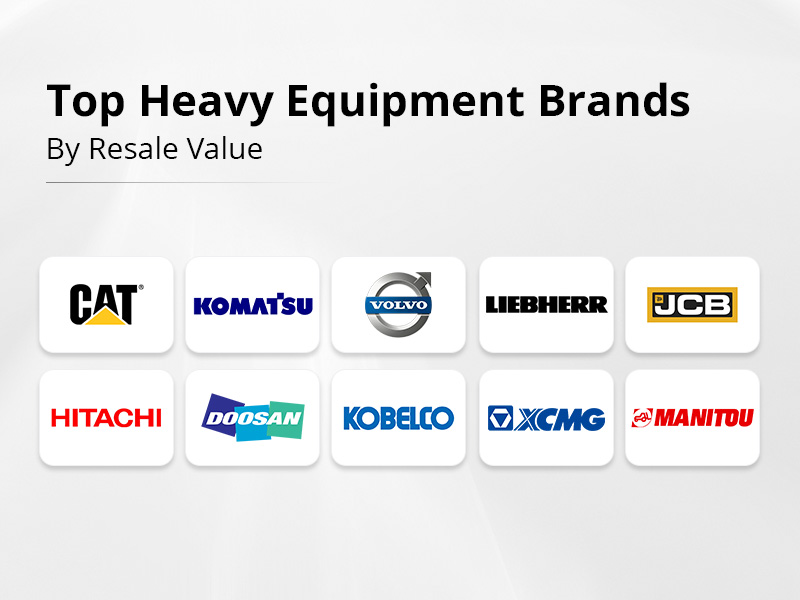
The Equipment managers facing capital constraints increasingly prioritise lifecycle costs over initial purchase price. In markets where used machinery accounts for 40–60% of total equipment transactions, resale value has become a critical metric in procurement strategy. A machine that depreciates 30% over five years represents fundamentally different economics than one losing 55% of its value over the same period.
This analysis examines the best resale value construction equipment brands based on auction performance data, secondary market pricing, and fleet disposal records from global markets. The rankings reflect real-world demand patterns, spare parts accessibility, and long-term durability across construction, mining, and materials handling sectors.
Methodology: How Resale Performance Was Assessed
Ranking used equipment brands UAE and international markets requires multiple data points beyond simple depreciation curves. This analysis evaluated six primary factors across wheeled loaders, excavators, articulated dump trucks, and telehandlers the equipment categories with the highest transaction volumes in secondary markets.
Depreciation rate was calculated from original equipment manufacturer list prices compared against verified auction results and dealer resale transactions over 3, 5, and 7-year intervals. Buyer demand was quantified through average days-to-sale, number of bidders per auction lot, and repeat purchase patterns. Durability incorporated warranty claim data, rebuild intervals, and documented operating hours at point of resale.
Parts availability measured both geographic distribution of service networks and average lead times for critical components. Auction performance tracked hammer prices against reserve estimates across three major auction houses. Market liquidity assessed the speed and ease with which equipment could be converted to cash across different regions.
The Top 10: Reliable Heavy Equipment Brands by Resale Value
1. Caterpillar
Caterpillar equipment consistently commands 65–70% of original value after five years in well-maintained condition. The brand's global service network spanning 190 countries directly correlates with buyer confidence in post-purchase support. Excavators in the 20–30 tonne class retain particularly strong values, with low-hour machines frequently exceeding book estimates by 8–12% at auction.
2. Komatsu
Japanese engineering and systematic maintenance protocols yield depreciation rates 2–4 percentage points better than industry averages. Komatsu's wheel loaders and tracked excavators benefit from exceptional component longevity, with hydraulic systems routinely achieving 12,000+ hours before major intervention. Secondary market pricing reflects this operational reliability.
3. Volvo Construction Equipment
Volvo's articulated haulers dominate resale rankings in their category, holding 62–68% of value over five years. The brand's emphasis on operator comfort translates to lower accumulated wear, whilst MATRIS telematics data provides verifiable machine histories that increase buyer confidence. Market liquidity remains high across European and Middle Eastern markets.
4. Liebherr
Mobile and crawler cranes from Liebherr represent the premium tier, with resale values influenced more by configuration and boom length than age. Well-specified units often depreciate linearly rather than following typical curved depreciation patterns. Parts availability through the manufacturer's direct distribution model eliminates third-party mark-ups that typically erode lifecycle economics.
5. JCB
Backhoe loaders and telehandlers from JCB benefit from ubiquitous parts networks and straightforward serviceability. Five-year depreciation typically ranges from 38–44%, placing the brand competitively against higher-priced alternatives. The Loadall telehandler series particularly excels in auction performance, with bidding activity consistently exceeding reserve levels.
6. Hitachi Construction Machinery
Hydraulic excavators in the 13–35 tonne range show depreciation rates of 40–48% over five years, supported by robust undercarriage designs and fuel-efficient power plants. Hitachi's merger with John Deere's construction division has expanded parts distribution networks, positively impacting resale confidence in previously underserved regions.
7. Doosan
Korean manufacturing efficiencies enable competitive initial pricing without sacrificing resale performance. Wheel loaders and excavators depreciate at rates comparable to Japanese competitors whilst offering 15–20% lower acquisition costs. This value proposition resonates strongly with hire fleets seeking optimal return on invested capital.
8. Kobelco
Specialisation in excavators allows Kobelco to maintain engineering focus that translates to market-leading fuel efficiency and longevity. Machines with documented maintenance records achieve hammer prices 5–8% above general market levels. The brand's relatively smaller production volumes create scarcity in secondary markets, supporting price stability.
9. XCMG
China's largest equipment manufacturer has transformed quality perception through systematic improvement programmes and international expansion. Resale values have strengthened 12–15% over the past three years as operational track records extend beyond 8,000–10,000 hours. Parts availability through regional distribution centres continues to improve market confidence.
10. Manitou
Material handling equipment, particularly rough-terrain forklifts and rotating telehandlers from Manitou, demonstrates consistent auction performance. Depreciation rates of 42–47% over five years reflect the brand's focus on rental market durability and simplified maintenance requirements. Geographic strength in Middle Eastern and African markets enhances liquidity.
Comparative Analysis: What Drives Resale Value Differences
Beyond brand reputation, specific attributes separate strong performers from those with accelerated depreciation. Equipment fitted with advanced telematics systems commands 6–9% premiums by providing verifiable operating data and maintenance histories. Machines with documented service records from authorised dealers consistently outperform those with incomplete documentation by 12–18%.
Engine tier ratings significantly impact values in emissions-regulated markets, with older-generation power plants facing restricted resale opportunities. Conversely, machines equipped with Tier 3 or Tier 4 compliant engines maintain broader appeal. Attachment compatibility and quick-coupler systems increase versatility, directly translating to faster sales and higher realised prices.
Paint condition and structural integrity serve as proxies for overall care, with cosmetic refurbishment yielding returns of 3:1 to 5:1 on investment prior to sale. Hour meter readings matter less than maintenance quality a 6,000-hour machine with gaps in service records typically underperforms a 9,000-hour unit with complete documentation.
Strategic Implications for Equipment Procurement
Acquisition decisions incorporating total cost of ownership rather than purchase price alone consistently yield superior financial outcomes. A machine depreciating at 35% over five years versus 55% represents £50,000–£80,000 in preserved capital on a £250,000 initial investment equivalent to an entire additional machine over a 15-year fleet replacement cycle.
Standardising fleet composition around brands with proven resale strength simplifies parts inventory, reduces technician training requirements, and accelerates maintenance cycles. This operational efficiency compounds with stronger exit values to fundamentally improve equipment economics. Markets with active secondary demand provide additional flexibility for fleet rightsizing during project transitions or economic adjustments.
Frequently Asked Questions
Q: How quickly does construction equipment depreciate in the first year?
New equipment typically experiences 15–22% depreciation upon delivery, with another 8–12% reduction through the first 12 months of operation. This initial value loss moderates to 6–8% annually in subsequent years for well-maintained machines from premium brands.
Q: Do attachments and accessories affect resale value significantly?
Purpose-built attachments that broaden machine capability such as hydraulic quick-couplers, multi-purpose buckets, or specialized grabs can increase resale values by 8–15%. Generic or worn attachments provide minimal benefit, whilst missing standard equipment components actively reduce buyer interest.
Q: Which equipment categories hold value best: wheeled or tracked machines?
Tracked excavators and dozers generally maintain stronger percentage values than wheeled loaders of equivalent specification, though absolute depreciation amounts vary by initial cost. Tracked undercarriages with 50–60% remaining life particularly appeal to buyers seeking operational longevity.
Q: How does operating hours versus age impact resale pricing?
Maintenance quality supersedes both metrics, though low-hour machines (under 3,000 hours) command premiums of 10–18% compared to average-hour equivalents. A 10-year-old machine with 4,000 documented hours typically outperforms a 5-year-old unit with 8,000 hours and incomplete records.
Leave a reply